
The role of automotive coupler bearings in the vehicle transmission system is crucial, especially in the power transmission and coupling process. They not only provide necessary mechanical support but also ensure the stability and reliability of the system under various operating conditions. Next, we will delve into the working principle of automotive coupler bearings in the power transmission and coupling process.
Basic functions of automotive couplers
Automotive couplers are mechanical devices used to connect or disconnect the engine and the transmission system, mainly for controlling power transmission under different operating conditions. When the coupler is working, it allows the power of the engine to be transmitted to the transmission system through the coupler; while in need of separating the engine and the transmission system, the coupler can break the power transmission.
The functions of the coupler bearings
The bearings inside the coupler play a crucial role, ensuring that the coupler can operate smoothly and efficiently during operation, while withstanding tremendous torque and moment from the engine and the transmission system. The main functions of the coupler bearings include:
Bear torque: Withstand and transmit the torque between the engine and the transmission system, ensuring smooth power transmission.
Reduce friction: By reducing the friction between the bearing and the housing, improve the efficiency of the system.
Support and guidance: Support the rotating components of the coupler and provide necessary guidance to ensure its operation on a specific path.
Prevent wear: Reduce the wear of the bearings through lubrication and sealing systems, extending the service life.
 The working principle of the coupler bearing
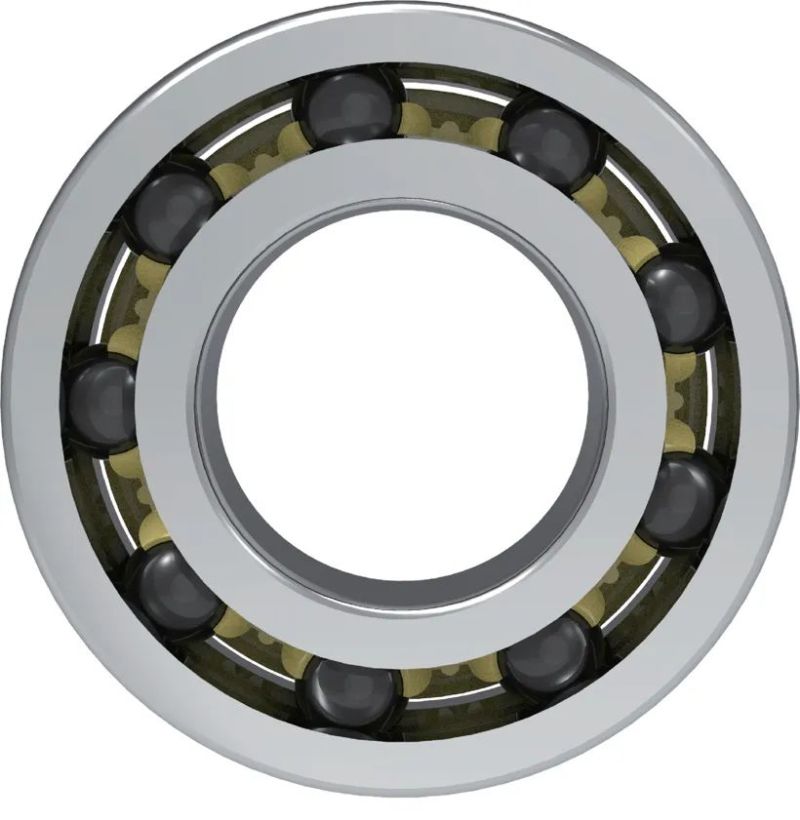
The working principle of the coupler bearing mainly relies on the balance between rolling friction and sliding friction. In the coupler, rolling bearings such as ball or roller bearings are usually used, which use their internal rolling elements to transmit torque through rolling contact with the bearing housing. This design, compared to sliding bearings, has a lower friction coefficient, thereby improving efficiency and reducing wear.
When the coupler is working, the power of the engine is transmitted to the transmission system through the coupler. During this process, the bearings inside the coupler bear tremendous torque from the engine and the transmission system. Through the precise design of bearing structures and lubrication systems, these bearings can effectively transmit torque to the transmission system while reducing friction and wear.
Conclusion
The coupler bearings play a core role in the power transmission and coupling process of vehicles, ensuring the stability and reliability of the system under various operating conditions. Through precise design and an efficient lubrication system, these bearings can withstand tremendous torque and moment, while reducing friction and wear, thereby extending the service life of the system. With the advancement of technology, future coupler bearings will be more efficient and durable, providing more reliable power transmission solutions for vehicles.